
Guardian Bedside Bedwetting Alarm Review
Guardian is our leading bedside alarm for families who want strong nighttime alerts without clipping an alarm or moisture sensor to the sleeper. Its disposable sensing mats prioritize comfort, hygiene and a simple reset after an accident.
We accept no manufacturer payments, ranking fees or purchase commissions. Guardian is assessed using our published eight-part methodology.
Excellent bedside system
The strongest no-wear option
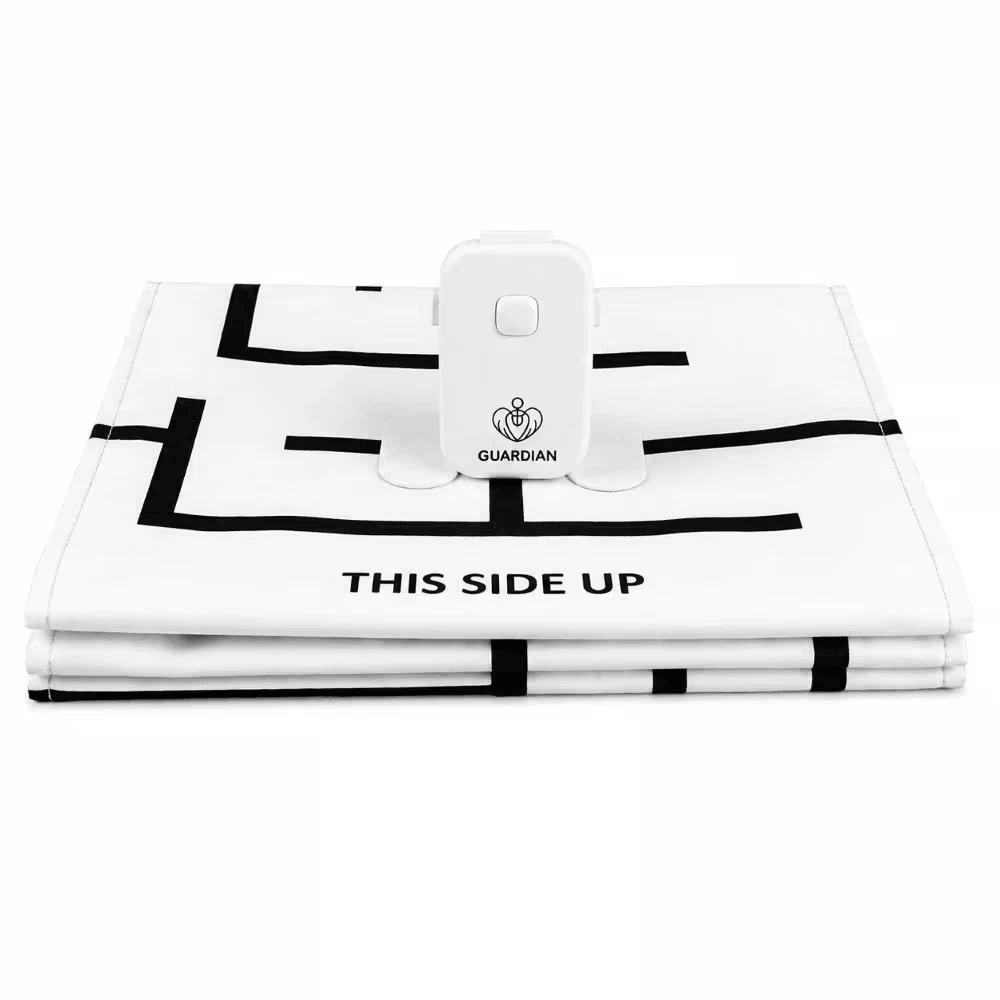
Guardian is meaningfully different from a conventional wearable alarm. A thin disposable moisture-sensing mat rests in the sleeping area and connects to the bedside alarm with a long cord. Nothing electronic is clipped to the user’s clothing or worn on the body.
That design solves two common objections to alarm training: discomfort from a body-worn device and the inconvenience of washing a reusable sensing pad after an accident. Guardian combines that comfort and hygiene advantage with eight rotating tones, strong vibration and selectable alert modes. The tradeoff is ongoing mat replacement cost, which should be included in the buying decision from the beginning.
What we like
- No alarm unit or sensor worn on the body
- Thin disposable mats require no washing
- Large sensing area supports natural movement
- Eight rotating alert tones
- Sound, vibration and combined modes
- Long cord allows flexible bedside placement
- Suitable for children, teens and adults
Consider before buying
- Replacement mats create an ongoing expense
- Mat placement must match the sleeping position
- A moving sleeper can leave the sensing area
- Bedside sound may wake others in the room
- Deep sleepers may initially need caregiver help
- Less compact than a wearable alarm for travel
How Guardian earned 9.0/10
Guardian scores especially well for comfort, hygiene and ease of resetting the bed. Its lower value score reflects the recurring cost of disposable mats.
| Testing category | Weight | Assessment | Score |
|---|---|---|---|
| Moisture Detection | 25% | 9.1 | |
| Wake-Up Performance | 20% | 8.9 | |
| Comfort & Wearability | 15% | 9.5 | |
| Ease of Use | 10% | 9.2 | |
| Reliability & Quality | 10% | 8.7 | |
| Cleaning & Hygiene | 10% | 9.7 | |
| Features & Technology | 5% | 8.8 | |
| Value | 5% | 6.4 |
Weighted calculation: 9.00/10. Scores may change if the system, mat design, accessories or evaluation findings change.
Where Guardian is different
The mat system changes comfort, cleanup and placement. Those differences matter more than simply comparing the number of tones.
Large-area moisture detection
A disposable mat provides a much larger sensing area than a clothing sensor. Precision sensing strips react when urine reaches the mat and trigger the alarm unit. This can feel more natural because the user sleeps without attaching a sensor to underwear.
The limitation is location. The mat must remain beneath the area where wetting is likely to occur. Families should observe the sleeper’s usual position and secure the mat carefully so movement does not leave the detection zone.
Wake-up performance
The alarm cycles through eight tones to reduce the chance of becoming accustomed to a single repeated sound. Families can use sound, vibration or a combined alert depending on the sleeper and environment. The alarm sits within reach on its bedside stand.
For a deep sleeper, the alarm may initially alert a caregiver before it fully wakes the user. The caregiver should wake the child or adult completely, guide the bathroom routine and avoid doing every step while the user remains half asleep.
Comfort and freedom of movement
Guardian’s greatest strength is that nothing is worn. There is no clip on the pajama top, no cable running along the body and no moisture sensor attached to underwear. This can be decisive for users with sensory objections to wearable alarms.
The thin mat remains the only element in the sleeping area. When positioned smoothly beneath a sheet according to the current instructions, it preserves a more natural sleep surface than bulky reusable pad systems.
Hygiene and cleanup
After a wetting event, the used mat is removed and discarded. There is no urine-soaked reusable pad to rinse, wash and dry before the next night. A fresh mat restores a clean sensing surface immediately, which is why Guardian receives our highest cleaning and hygiene score.
The convenience carries a price. Families should keep enough mats on hand and include refill purchases when estimating the total cost of several weeks or months of training.
The recurring-cost question
The complete kit includes 24 disposable mats, while refill supplies are sold separately. A mat-based system may cost more over time than a washable or clip-on sensor. Guardian makes the most sense when the no-wear comfort and no-wash hygiene advantages are important enough to justify that recurring expense.
How to set up Guardian correctly
Correct placement and a consistent wake-up routine are essential. The disposable mat removes washing, but it does not remove the training process.
Position and connect
Place a fresh mat flat in the expected wetting area, secure it as directed and connect it to the alarm with the long cord. Put the alarm unit on its bedside stand within reach.
Select and test
Choose the appropriate sensitivity and alert mode. Test the mat and alarm connection before sleep so the user recognizes the sound, vibration and shutoff routine.
Wake, replace and reset
When the alarm activates, wake fully and use the bathroom. Remove the used mat, change wet bedding or clothing as needed, install a fresh mat and reset the system.
See the complete guide to using a bedwetting alarm correctly for caregiver techniques and progress tracking.
Who should choose Guardian Bedside?
Strong choice for
- Children who refuse a clip, sensor or cable on the body
- Teens wanting a less body-focused alarm format
- Adults who need bedwetting or incontinence monitoring
- Users with sensory discomfort from wearable alarms
- Families prioritizing hygiene and fast cleanup
- Sleepers who remain within a predictable area of the bed
Consider another format if
- Ongoing mat cost is a major concern
- The sleeper moves far outside the mat area
- A highly portable travel alarm is the priority
- The user prefers the earliest possible clothing-level detection
- There is limited space for a bedside alarm and cord
- A single reusable sensor is preferred
Guardian appears in our guides to the best bedwetting alarm for children and best bedwetting alarm for adults.
Guardian compared with approved wearable alarms
The main decision is format: a bedside sensing mat versus a sensor positioned directly on clothing.
| Alarm | Format | Best reason to choose it | Key tradeoff |
|---|---|---|---|
| Guardian Bedside | Disposable sensing mat | No body-worn sensor and no mat washing | Recurring refill cost |
| Chummie Premium | Wearable | Close-position detection and varied alerts | Sensor and cable worn nightly |
| Smart Alarm | Wearable | Straightforward portable setup | Fewer advanced comfort advantages |
| Shield Max | Wearable | Multi-sensory alert options | Requires clothing attachment |
Read wearable vs bedside bedwetting alarms or open the full comparison chart.
Guardian Bedside FAQ
Does Guardian require anything to be worn?
No electronic device or moisture sensor is attached to the body. The sensing mat lies in the sleeping area and connects to the bedside alarm unit with a long cord.
Are the Guardian mats reusable?
The current Guardian system uses disposable mats. After a wetting event, remove the used mat and replace it with a fresh one. This eliminates washing and drying a urine-soaked sensing pad.
How many mats are included?
The complete system currently includes 24 disposable mats along with the alarm unit, stand, connecting cord, batteries and instructions. Package contents can change, so verify the current listing before purchase.
Can Guardian wake a deep sleeper?
It uses loud rotating tones and strong vibration, but a caregiver may still need to wake a deep sleeper during early training. Consistent caregiver participation helps connect the alarm with waking and using the bathroom.
Will movement cause the mat to shift?
The mats use a stay-in-place design, but placement remains important. Position the mat beneath the likely wetting area and follow the current attachment instructions to reduce folding or movement.
Is Guardian suitable for adults?
Yes. Its no-wear design and large sensing area can also suit teens and adults. For an adult, decide whether the purpose is conditioning, nighttime monitoring or broader incontinence support, and involve a clinician when appropriate.
How much do replacement mats cost?
Refill pricing can change. Current materials describe approximately one mat per night and roughly $30 per month. Treat this as an ongoing supply cost and verify current pricing directly.
Does this review earn commissions?
No. BestBedwettingAlarm.com does not accept purchase commissions, manufacturer payments or paid ranking fees.
Editorial independence
This review is uncompensated. Product features are separated from our editorial judgment, and Guardian’s 9.0 score follows the same weighted methodology used for every approved alarm. Read our editorial policy and review independence standard.
Our leading bedside bedwetting alarm
Guardian earns 9.0/10 because it delivers a genuinely different experience: no body-worn electronics, excellent hygiene, fast mat replacement and strong adjustable alerts. It is the bedside system we would compare first when comfort and cleanup matter more than minimizing long-term supply cost.