
Smart Bedwetting Alarm Review
Smart Alarm is a straightforward wearable option for families who want the essential moisture-detection and wake-up process without an elaborate collection of settings. Its strongest advantages are simplicity, portability and an approachable nightly routine.
We accept no manufacturer payments, paid rankings or purchase commissions. Smart Alarm is assessed using our published eight-part testing methodology.
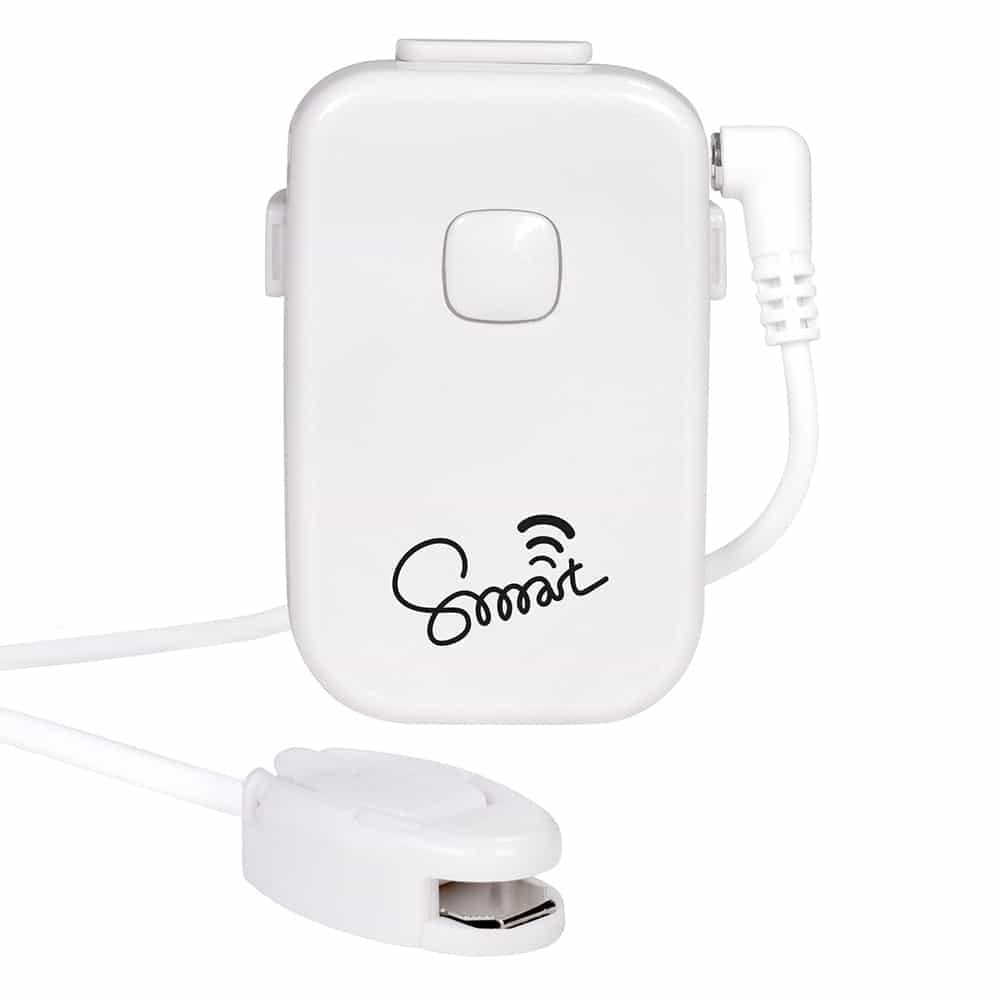
Very good simple wearable
A focused alarm without unnecessary complexity
Smart Alarm concentrates on the basic conditioning sequence: detect moisture, produce an immediate alert and help the sleeper wake, stop the flow and use the bathroom. That focused design makes it easier to introduce than an alarm filled with secondary controls.
Simplicity is a legitimate benefit, particularly for a first-time user. The attachment and reset routine can be learned quickly, and the wearable format makes the alarm easier to pack than a bedside system. The limitation is that a simpler design offers fewer ways to customize the experience. Families managing a very deep sleeper or a child with strong sensory preferences should compare alert variety, vibration, placement and comfort—not just price.
What we like
- Simple setup and nightly routine
- Focuses on essential alarm functions
- Sound and vibration alerts
- Wearable and easy to transport
- Approachable for first-time users
- Strong value within its category
Consider before buying
- Fewer advanced alert options
- Sensor placement must be correct every night
- Alarm and cable are worn during sleep
- Deep sleepers may need caregiver support
- Less suitable for users who reject clothing clips
- Comfort depends on careful cable routing
How Smart Alarm earned 8.7/10
Smart Alarm performs well in the high-weight essentials and earns its best marks for ease of use and value. Its features score is lower because simplicity is the point of the design.
| Testing category | Weight | Assessment | Score |
|---|---|---|---|
| Moisture Detection | 25% | 8.8 | |
| Wake-Up Performance | 20% | 8.5 | |
| Comfort & Wearability | 15% | 8.6 | |
| Ease of Use | 10% | 9.3 | |
| Reliability & Quality | 10% | 8.6 | |
| Cleaning & Hygiene | 10% | 8.5 | |
| Features & Technology | 5% | 7.8 | |
| Value | 5% | 9.6 |
Weighted calculation: 8.70/10. Scores may change if the alarm design, supplied accessories or our evaluation findings change.
What matters in nightly use
A simple alarm still depends on sensor placement, alert response and a consistent family routine. These practical details determine whether simplicity becomes an advantage.
Moisture detection
The sensor must sit where the first drops are likely to reach it. Correct positioning gives the conditioning process its best chance to interrupt wetting early. A loose or poorly placed sensor can delay the alert regardless of how loud the alarm may be.
Families should test the connection before bed and follow the current instructions for attaching the sensor. Younger users often benefit from practicing this during the day until they can take an active role in the routine.
Wake-up performance
Smart Alarm combines audible and vibration alerts, giving the sleeper more than one stimulus. That is useful, but no wearable alarm can guarantee that a deep sleeper will wake independently on the first nights.
If the child sleeps through the alert, a caregiver should wake them fully and guide them to the bathroom. The goal is not for the caregiver to silence the unit while the child stays asleep; the goal is to connect the sensation of a filling bladder with waking and taking action.
Comfort and wearability
The compact wearable format is less demanding on bedroom space than a bedside unit. It also allows the sensor to remain close to the likely point of initial moisture. The tradeoff is physical contact: the alarm, sensor and connecting path must be positioned comfortably.
Route any cable exactly as instructed, avoid twists, and confirm that clothing clips do not pinch. A child who dislikes the physical setup may do better with a no-wear bedside format.
Cleaning and reset
A wearable sensor requires a clean reset after an activation. Disconnect or silence the alarm as instructed, clean and dry the sensing area, change wet clothing and bedding, and confirm that the system is ready before returning to sleep.
A hurried reset can lead to false reactivation or an alarm that is not ready for the next event. Simplicity helps here: fewer controls make it easier to repeat the same sequence consistently.
Simplicity is most valuable when it improves consistency
A basic feature list should not be confused with weak performance. If a family finds the alarm easy to attach, test and reset every night, that consistency can be more useful than advanced settings they rarely use. Smart Alarm’s value depends on matching the product to the sleeper rather than treating complexity as an automatic advantage.
How to use Smart Alarm effectively
The alarm is a conditioning tool, not an automatic cure. Establish the routine before the first night and keep it consistent.
Attach and test
Position the moisture sensor according to the instructions, place the alarm securely and test the sound and vibration before sleep. The user should know what the alert means.
Wake and respond
At activation, wake fully, stop the alarm as instructed and go to the bathroom. A caregiver should assist a deep sleeper until independent waking improves.
Clean and record
Clean and dry the sensor, change wet items, reset the alarm and record the event. Tracking helps reveal progress that may be gradual rather than perfectly linear.
Read our detailed guide to using a bedwetting alarm correctly before starting the program.
Who should choose Smart Alarm?
Strong choice for
- Families purchasing a first wearable alarm
- Users who prefer fewer controls and settings
- Children able to tolerate a clipped sensor and alarm
- Travel, sleepovers and households short on space
- Parents who value a quick nightly setup
- Budget-conscious buyers prioritizing the essentials
Consider another format if
- The sleeper needs broader alert customization
- A body-worn sensor creates sensory discomfort
- The child moves enough to disturb clips or cables
- A no-wash disposable sensing surface is preferred
- The family wants a bedside rather than wearable unit
- Caregiver support is unavailable for a deep sleeper
See our guides to the best alarms for children, deep sleepers and travel and sleepovers.
Smart Alarm compared with our leading options
The best choice depends on whether the family prioritizes simplicity, advanced wearable alerts or a no-wear bedside system.
| Alarm | Format | Best reason to choose it | Key tradeoff |
|---|---|---|---|
| Smart Alarm | Wearable | Simple routine and strong value | Fewer advanced options |
| Chummie Premium | Wearable | More varied multi-sensory alerts | More features to learn |
| Guardian Bedside | Bedside sensing mat | No sensor or alarm worn on the body | Ongoing disposable mat cost |
| Shield Max | Wearable | Broader alert flexibility | More elaborate than a basic alarm |
Open the complete bedwetting alarm comparison chart or read wearable vs bedside alarms.
Smart Bedwetting Alarm FAQ
What type of alarm is Smart Alarm?
It is a wearable bedwetting alarm. A moisture sensor is positioned on clothing and the alarm unit provides sound and vibration alerts when moisture is detected.
Why choose a simpler bedwetting alarm?
A simpler design can make attachment, testing and resetting easier to learn. This can improve nightly consistency, especially for first-time users who may feel overwhelmed by numerous settings.
Can Smart Alarm wake a deep sleeper?
It provides sound and vibration, but deep sleepers may initially need caregiver help. A parent should wake the child fully and guide the bathroom routine rather than merely turning off the alert.
Is Smart Alarm suitable for travel?
Its wearable format is comparatively portable and does not require a bedside mat. Pack the complete system, cleaning supplies, spare clothing and the current instructions.
Where should the moisture sensor be placed?
Follow the manufacturer’s current placement instructions and position the sensor where the first moisture is likely to occur. Test the connection before sleep.
How long does alarm training take?
There is no fixed timeline. Progress depends on the sleeper, consistency, caregiver participation and underlying health factors. Track patterns over several weeks and seek professional guidance when concerns persist.
Is a wearable alarm right for every child?
No. Some users dislike clips, cables or anything attached to sleepwear. A bedside mat system may be more appropriate when body-worn equipment prevents consistent use.
Does this review earn purchase commissions?
No. BestBedwettingAlarm.com accepts no purchase commissions, manufacturer payments or paid ranking fees.
Editorial independence
This review is uncompensated. Smart Alarm’s 8.7 score follows the same weighted method used for every approved alarm. Product features are separated from our editorial judgment. Read our editorial policy and review independence standard.
A very good starting point for simple alarm training
Smart Alarm earns 8.7/10 by doing the essentials well and keeping the nightly process approachable. It is our simplicity-focused choice for families who want a portable wearable alarm with sound and vibration without paying for a long list of secondary features. Deep sleepers and users with sensory concerns should compare its format carefully before choosing.